• Home
  • Forum
  • YouTube
  • CityscapeCruiser
  • Contact Us
Computer How To
Menu Close
  • Home
  • Forum
  • YouTube
  • CityscapeCruiser
  • Contact Us

Linux

How To Monitor Disk Load in Linux
August 24, 2017arstech Leave a Comment

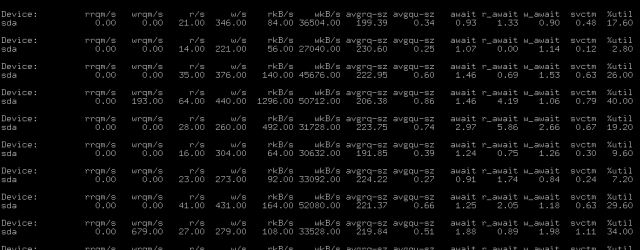
How To Monitor Disk Load in Linux iostat utility will help measure  and monitor hard drive load:   # iostat -dx /dev/sda 5 As result you can see output:   How to Securely Wipe Hard Drive in Linux

CentOS, Linux, Ubuntu disk, disk load, Hard drive, iostat, Linux, monitor

How To Create a Sudo User

August 11, 2017arstech Leave a Comment

How To Create a Sudo User CentOS Login into your server as root. If you already have user you can use usermod  command ro add the user to the wheel group: # usermod -aG wheel username For testing sudo for that… Continue Reading →

CentOS, Linux centos, root, sudo, Sudo User, usermod, wheel

Check Disk Speed in Linux From Terminal. How To

June 16, 2017arstech Leave a Comment

In this article you will learn how to check disk speed in Linux from terminal. We can check Linux disk (HDD or SSD) I/O performance with hdparm command. Hdparm is a command line utility for Linux to set and view… Continue Reading →

CentOS, Linux, Ubuntu centos, Disk Speed, Hard drive, HDD, hdparm, hdparm Install, hdparm Speed Test, Ubuntu

OpenVAS error: Login failed. OMP service is down.

June 12, 2017arstech 2 Comments

How to fix OpenVAS error: Login failed. OMP service is down Just run two commands from Linux terminal: # openvasmd stop # openvasmd start If you like what you are reading, please: Buy me a coffee

Linux, Network, Ubuntu How to, Linux, OpenVAS

How to verify DDOS attack with netstat command on Linux Terminal

May 8, 2017arstech Leave a Comment

Your server appearing pretty slow could be many things from wrong configs, scripts and dodgy hardware – but sometimes it could be because someone is flooding your server with traffic known as DoS ( Denial of Service ) or DDoS… Continue Reading →

Linux DDOS attack, Denial-of-service, DOS attack, iptables, netstat, SYNC_REC

Apache Tomcat on Ubuntu 16.04

March 22, 2017arstech Leave a Comment
Apache Tomcat

Apache Tomcat on Ubuntu 16.04 Apache Tomcat is an open-source software implementation of the Java Servlet and Java Server Pages technologies. With this guide, you’ll run applications within Tomcat using the OpenJDK implementation of the Java development environment. Before You… Continue Reading →
Linux, Ubuntu Apache Tomcat, java, Ubuntu

How To Install Htop on CentOS 7

March 17, 2017arstech Leave a Comment
Install Htop on CentOS 7

How To Install Htop on CentOS 7 In this article I will show how to Install htop on CentOS 7 Linux from EPEL repository. Htop is a one of the best an alternative tool for Linux top command. By default… Continue Reading →

CentOS, Linux centos 7, EPEL, htop, Linux, yum

Use Youtube-dl With FFmpeg. Examples

March 2, 2017arstech 1 Comment
ffmpeg

Use Youtube-dl With FFmpeg How to Using youtube-dl with ffmpeg or How to grab YouTube video and re stream as live RTMP stream with FFMPEG First you need install youtube-dl and ffmpeg last version (because last ffmpeg builds supports https… Continue Reading →

FFmpeg, IpTV, Linux, Video ffmpeg, restream, transcode, youtube-dl

Install youtube-dl on Ubuntu

March 2, 2017arstech Leave a Comment

You can use pip: sudo apt-get install python3-pip  sudo pip3 install –upgrade youtube_dl

Linux, Ubuntu Install youtube-dl

How to setup a Private Anonymous Proxy server Squid on Ubuntu/Debian

January 23, 2017arstech Leave a Comment

Setup a Private Anonymous Proxy server Squid Update System # apt-get update # apt-get upgrade Installng Squid3 pakage # apt-get install squid3 squid3-common Edit Squid configuration file: # vi /etc/squid3/squid.conf To allow the access to Squid proxy only from your… Continue Reading →

Linux, Ubuntu Anonymous Proxy, Proxy server, Squid

Post navigation

← Older Articles
Newer Articles →

Tags

Apache centos centos 7 CentOS 8 convert debian DNS Docker EPEL fdisk ffmpeg FreeNAS FreeSWITCH FusionPBX git GitLab Hard drive hostname iptables java Linux mysql Nginx Nvidia password port proxmox Python rdp redhat RHEL root script SIP sox SSH tcpdump Ubuntu Ubuntu 18.04 vestacp VMWARE Windows Windows 10 yum Zimbra

Tags

Apache centos centos 7 CentOS 8 convert debian DNS Docker EPEL fdisk ffmpeg FreeNAS FreeSWITCH FusionPBX git GitLab Hard drive hostname iptables java Linux mysql Nginx Nvidia password port proxmox Python rdp redhat RHEL root script SIP sox SSH tcpdump Ubuntu Ubuntu 18.04 vestacp VMWARE Windows Windows 10 yum Zimbra

Recent Posts

  • Network Interface Traffic Monitoring Linux
  • How to Push an Existing Local Project to GitLab
  • Fix “Cannot open TUN/TAP dev /dev/net/tun”
  • 5 Best Hardware Crypto Wallets for 2026 – Full Review, Security Analysis & Real Usage Insights
  • Video Encoding Bitrates for 4K & 1080p — H.264 vs H.265 (HEVC)

Recent Comments

  • INSTALL IPTABLES IN DEBIAN 11 (BULLSEYE) | Bots! on Install IPtables in Debian 11 (Bullseye)
  • Upgrading php7.4 to php8.0 on Amazon Linux 2 Webserver · 18a Productions on [SOLVED] Install PHP 7/8 On Amazon Linux 2
  • Proxmox: Mise à jour impossible. - md.lu on Proxmox VE apt-get update error E: Failed to fetch https://enterprise.proxmox.com/debian/pve/dists/bullseye/InRelease 401 Unauthorized IP
  • root login ssh ubuntu - playsquare.tv on How To Allow SSH Root Login On Ubuntu 20.04
  • ubuntu ssh server root login – european-borderlands.org on How To Allow SSH Root Login On Ubuntu 20.04

Categories

  • Android
  • Asterisk
  • CentOS
  • Cisco
  • cryptocurrency
  • DNS
  • E-mail
  • elastix
  • FFmpeg
  • FreeNAS
  • FreeSWITCH
  • FusionPBX
  • General
  • IpTV
  • kloxo
  • Linux
  • MikroTik
  • MySQL
  • Network
  • News and Reviews
  • sipXecs
  • Terraform
  • Ubuntu
  • Uncategorized
  • Video
  • VMware
  • VoIP
  • Windows
  • WordPress
© 2025 Computer How To. All rights reserved.
Fashionista by aThemes