PuTTY "Unable to use key file (OpenSSH SSH-2 private key (new format))": convert to .ppk
PuTTY can't read OpenSSH private keys directly. Load the key in PuTTYgen, save it as .ppk, and point PuTTY to the new file. Or skip PuTTY: Windows 10 and 11 have OpenSSH built in and use the id_rsa key as it is.


PuTTY shows Unable to use key file "id_rsa" (OpenSSH SSH-2 private key (new format)) because it only reads its own .ppk key format, not OpenSSH keys. Your key is fine. Open PuTTYgen, click Load, select the id_rsa (or id_ed25519) file, click Save private key, and use the new .ppk file in PuTTY under Connection > SSH > Auth > Credentials.
If you don't need PuTTY, there's a shorter way: Windows 10 and 11 ship with the OpenSSH client, which uses the key as it is. Both options are below.
Why PuTTY rejects the key
Keys created with ssh-keygen on Linux, macOS or Windows OpenSSH start with this line:
-----BEGIN OPENSSH PRIVATE KEY-----
That's the OpenSSH format. PuTTY and its tools (Pageant, Plink, PSCP) use their own format with a .ppk extension. PuTTYgen can convert between the two in both directions, without changing the key itself. The public key on the server stays the same, so you don't need to touch authorized_keys.
Convert id_rsa to .ppk in PuTTYgen
- Open PuTTYgen (it's installed with PuTTY; search for it in the Start menu).
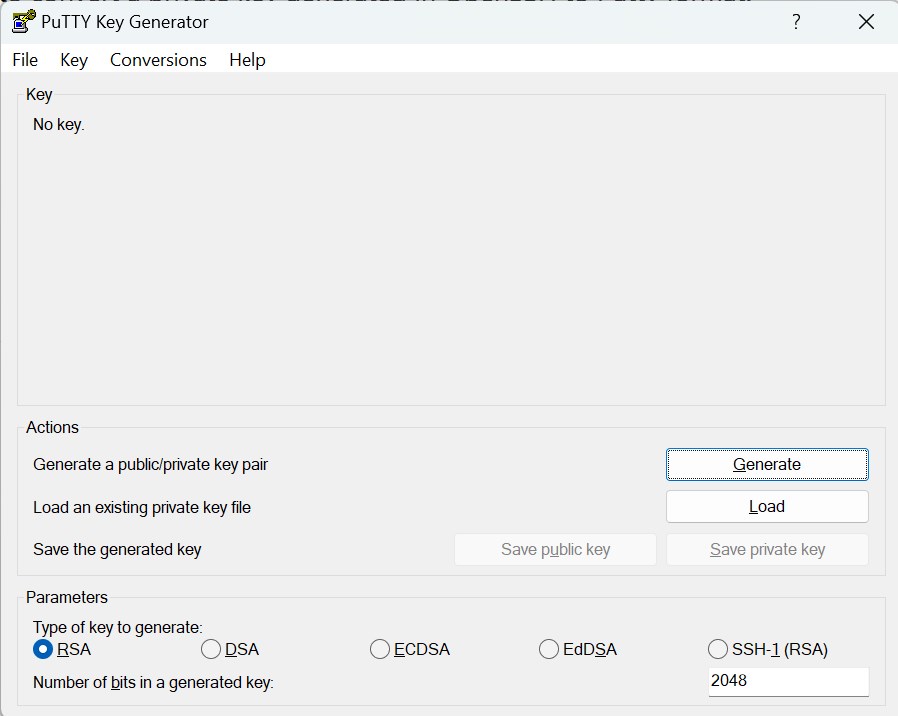
- Click Load. In the file dialog, change the filter to All Files (*.*), because OpenSSH keys have no extension. Select your private key, usually
C:\Users\<you>\.ssh\id_rsaorid_ed25519. You can also use Conversions > Import key. - If the key has a passphrase, enter it. PuTTYgen shows "Successfully imported foreign key".
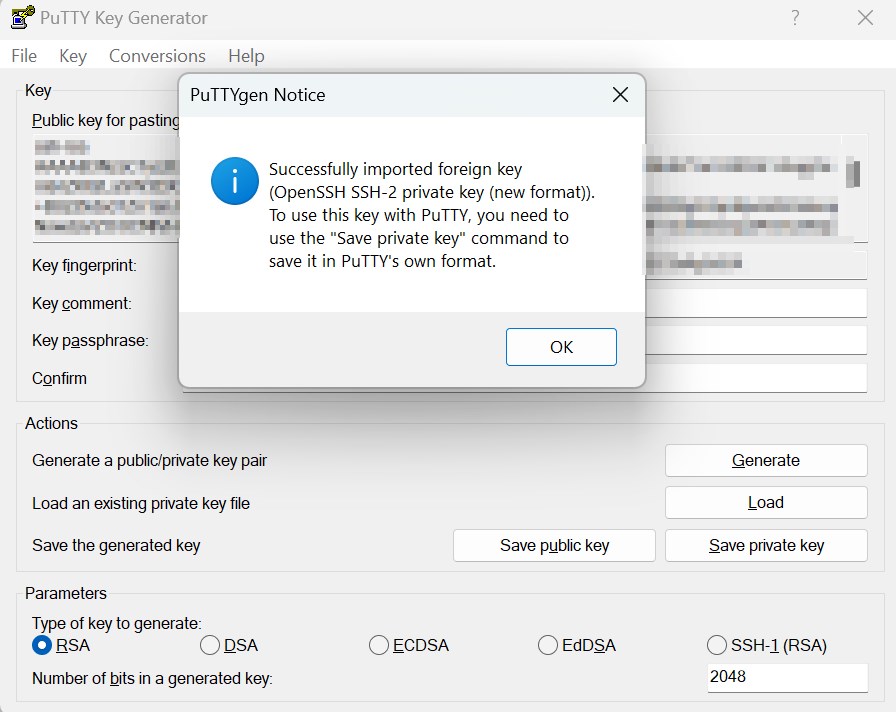
- Click Save private key and save it as
id_rsa.ppk. Keep the passphrase on it if you had one.
Then in PuTTY: Connection > SSH > Auth > Credentials > Private key file for authentication, browse to the .ppk file, go back to Session, and save the session so you don't have to do it again.
Convert from the command line
On Linux or macOS, puttygen comes in the PuTTY tools package (sudo apt install putty-tools on Debian/Ubuntu, brew install putty on macOS):
puttygen ~/.ssh/id_rsa -O private -o id_rsa.ppk
And the other way, from .ppk back to OpenSSH:
puttygen id_rsa.ppk -O private-openssh -o id_rsa
In the Windows GUI, the reverse conversion is Conversions > Export OpenSSH key.
Older tools: save as PPK version 2
PuTTY 0.75 and newer save keys in PPK version 3. Older PuTTY builds and some older third-party tools (old WinSCP or FileZilla versions, some network gear) only read version 2. If one of them says it can't read the .ppk, open the key in PuTTYgen, go to Key > Parameters for saving key files, choose PPK file version 2, and save again.
Better fix: update PuTTY. The current release is PuTTY 0.85 from August 2026, which fixed several security issues.
Skip PuTTY: use the OpenSSH client built into Windows
Windows 10 (1809 and later) and Windows 11 include ssh.exe. It reads OpenSSH keys directly, so there's nothing to convert. Open PowerShell or Windows Terminal:
ssh -i $env:USERPROFILE\.ssh\id_rsa user@server-ip
If the key is in C:\Users\<you>\.ssh\ with the default name, you can leave out -i:
ssh user@server-ip
To avoid typing it every time, add the host to C:\Users\<you>\.ssh\config:
Host myserver
    HostName 203.0.113.10
    User admin
    IdentityFile ~/.ssh/id_rsa
Then just ssh myserver. The same config works for jump hosts, see how to use an SSH jump host.
"UNPROTECTED PRIVATE KEY FILE" on Windows
If Windows OpenSSH refuses the key because its permissions are too open, remove inherited permissions and give only your user read access:
icacls $env:USERPROFILE\.ssh\id_rsa /inheritance:r
icacls $env:USERPROFILE\.ssh\id_rsa /grant:r "$($env:USERNAME):(R)"
Microsoft covers the rest of key handling, including ssh-agent on Windows, in its OpenSSH key management guide.
After converting: "Server refused our key"
If PuTTY now loads the key but the server says Server refused our key, the problem is on the server side. The matching public key isn't in ~/.ssh/authorized_keys for that user, or the file permissions are wrong. I covered that setup in SSH public key authentication and SSH login without a password.
My take
On a modern Windows machine I'd use the built-in ssh in Windows Terminal and keep one OpenSSH key for everything. PuTTY still makes sense if you rely on saved sessions, serial consoles or tools that only speak .ppk. In that case, convert once, keep both files next to each other, and protect the .ppk with the same passphrase.
FAQ
Why does PuTTY say "Unable to use key file (OpenSSH SSH-2 private key (new format))"?
PuTTY only accepts keys in its own .ppk format. Your key is in OpenSSH format. Convert it with PuTTYgen (Load, then Save private key) and use the .ppk file.
How do I convert id_rsa to .ppk?
Open PuTTYgen, click Load, set the file filter to All Files, select id_rsa, then click Save private key. On Linux or macOS: puttygen id_rsa -O private -o id_rsa.ppk.
Does converting the key change it?
No. Only the file format changes. The public key stays the same, so the server's authorized_keys doesn't need updating.
Can I use an ed25519 key with PuTTY?
Yes. Current PuTTY supports Ed25519. Convert id_ed25519 to .ppk the same way.
Do I still need PuTTY on Windows?
Not for normal SSH. Windows 10 and 11 include the OpenSSH client, and ssh user@host in PowerShell uses your OpenSSH keys directly.