How to enable virtualization (SVM Mode) in Gigabyte and Aorus BIOS
On Gigabyte and Aorus boards, AMD virtualization is called SVM Mode and it's off by default. Here's where it lives in the BIOS on X570, B550, B650 and X870 boards, the Intel equivalent, IOMMU for passthrough, and how to check it worked.


On Gigabyte and Aorus motherboards, AMD virtualization is called SVM Mode, and it's disabled by default. You'll find it in the BIOS under Tweaker > Advanced CPU Settings > SVM Mode. Set it to Enabled, press F10 to save, and reboot.
That one switch is what WSL2, Hyper-V, Docker Desktop, VirtualBox, VMware and Android emulators need. Below is the full path with screenshots, the Intel equivalent, the IOMMU setting you need for GPU passthrough, and how to confirm it's really on.
Enable SVM Mode on a Gigabyte or Aorus board (AMD)
The path is the same on AM4 boards (X570, B550, A520) and AM5 boards (X670, B650, X870, B850). Gigabyte's own B550 BIOS manual lists SVM Mode under Tweaker > Advanced CPU Settings.
- Restart the PC and press Del repeatedly while it boots.
- If the BIOS opens in Easy Mode, press F2 to switch to Advanced Mode.
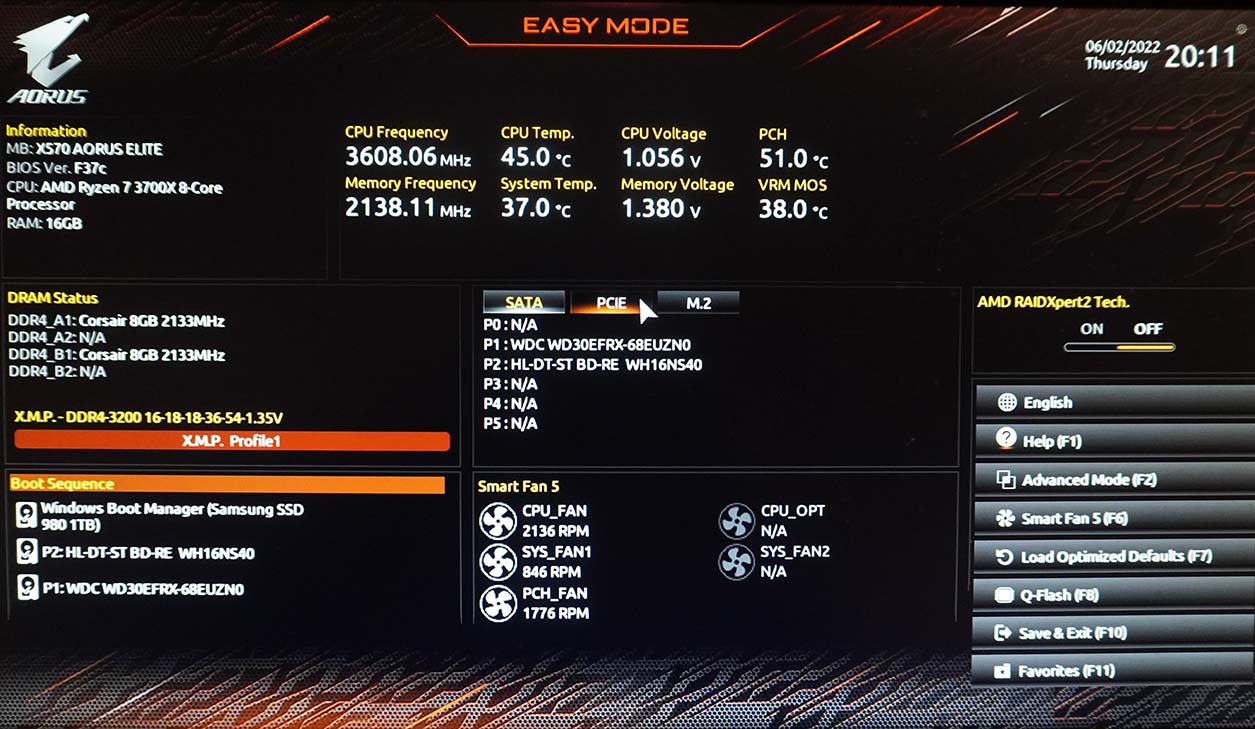
- Open the Tweaker tab and select Advanced CPU Settings.
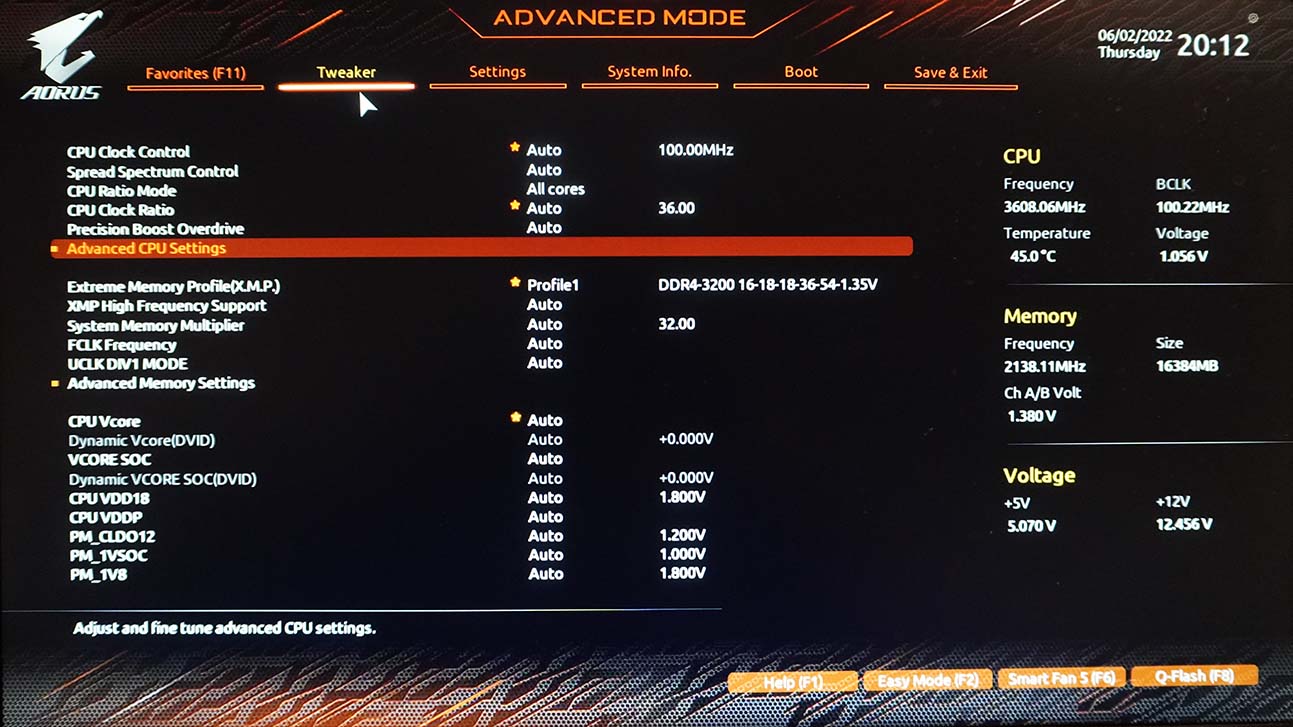
- Select SVM Mode (Secure Virtual Machine) and set it to Enabled.
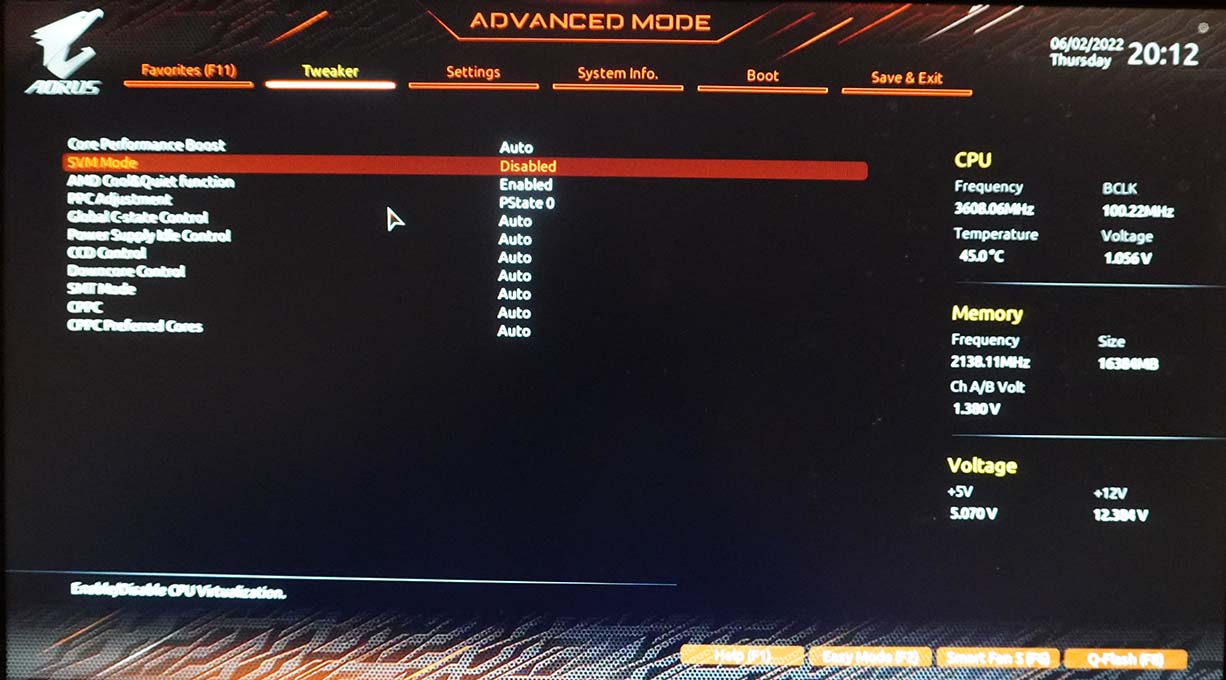
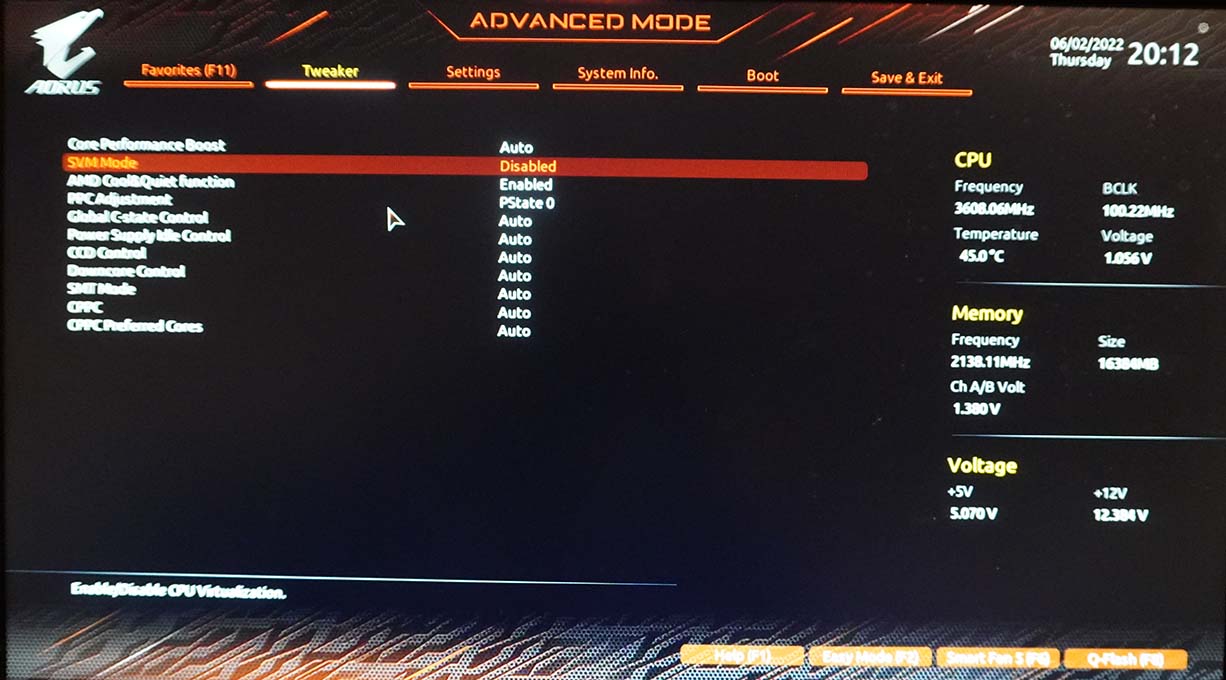
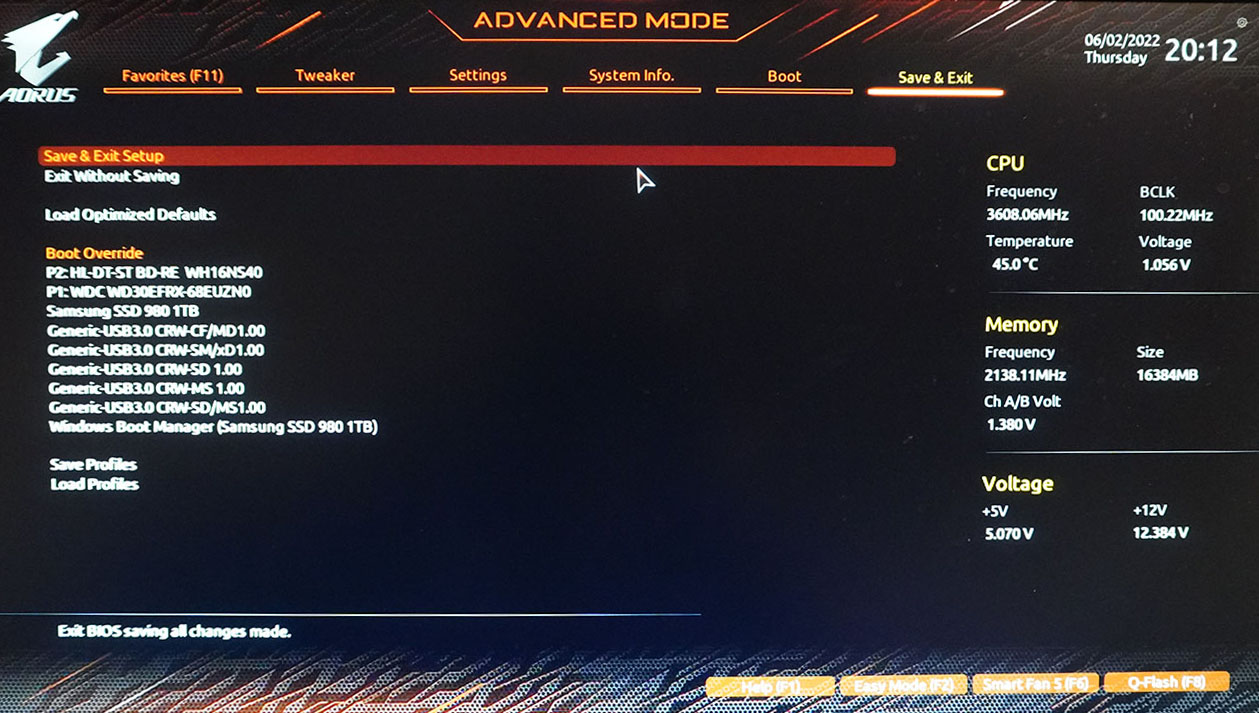
- Press F10, confirm Save & Exit, and let the PC reboot.
Here's the same process on video:
On older Gigabyte boards with the pre-2019 BIOS, the same option sits under M.I.T. > Advanced Frequency Settings > Advanced CPU Core Settings > SVM Mode.
Gigabyte boards with an Intel CPU
On Intel boards (Z890, B860, Z790, B760 and older), the CPU virtualization switch is Intel Virtualization Technology (VT-x). In the current Gigabyte BIOS it's usually under Tweaker > Advanced CPU Settings, next to where AMD boards show SVM Mode. On some boards it's in Settings > Miscellaneous instead. VT-d, the Intel version of IOMMU, is under Settings > Miscellaneous.
For WSL2, Hyper-V and normal VMs you only need VT-x. VT-d matters for passing a GPU or NIC through to a VM.
IOMMU for GPU or NIC passthrough
SVM Mode is enough to run virtual machines. If you want to give a VM a real PCIe device, like a GPU in Proxmox or an HBA for TrueNAS, you also need IOMMU.
On Gigabyte AMD boards, open Settings > Miscellaneous (on some boards Settings > AMD CBS > NBIO Common Options) and set IOMMU to Enabled. Leaving it on Auto doesn't always expose it to the OS.
How well passthrough works also depends on how the board groups its PCIe slots, which is partly down to the chipset. I explained what the chipset controls in what a motherboard chipset is and how to find yours.
Check that virtualization is on
Windows. Open Task Manager, go to Performance > CPU and look at Virtualization in the bottom right. It should say Enabled.
If you prefer the command line:
systeminfo | Select-String "Virtualization|hypervisor"
You'll see either Virtualization Enabled In Firmware: Yes, or A hypervisor has been detected. The second one also means it's on: Windows is already running Hyper-V or VBS, so it hides the separate checks.
Linux. Check that the CPU flag is visible:
lscpu | grep -i virtualization
On AMD you should see Virtualization: AMD-V, on Intel VT-x. To check the KVM device that QEMU and Proxmox use:
ls -l /dev/kvm
For IOMMU, look for it in the kernel log:
sudo dmesg | grep -i -e iommu -e amd-vi -e dmar
If you run VMs on Proxmox, install the guest agent next: QEMU guest agent on Ubuntu and Debian.
Still not working? Common causes
- A BIOS update reset it. Flashing a new BIOS or loading optimized defaults puts SVM Mode back to Disabled. This is the most common reason virtualization "suddenly" stops working on Gigabyte boards. Re-enable it after every update.
- WSL2 error 0x80370102. Virtualization is off in the BIOS, or the Windows feature isn't installed. Enable SVM, then run
wsl --installagain (see Microsoft's WSL install guide), or turn on Virtual Machine Platform in Windows Features. - VirtualBox says AMD-V is disabled (VERR_SVM_DISABLED). Same fix: SVM Mode in the BIOS. If it's already on, Hyper-V may be holding the hardware. Current VirtualBox versions can run on top of Hyper-V, just slower.
- Docker Desktop: "Virtualization support not detected". Check Task Manager first. If it says Enabled, the problem is the WSL2 or Hyper-V feature in Windows, not the BIOS.
- Clear CMOS. If settings don't stick, a clear CMOS (button or jumper) also wipes the change, so redo it afterwards.
Should you leave SVM Mode on?
Yes. On a desktop there's no real downside. The performance cost when you're not running VMs is effectively zero, and modern Windows uses virtualization for security features like Memory Integrity anyway. Gigabyte ships it off by default, but I would turn it on during the first boot of any AMD build.
FAQ
What is SVM Mode in the BIOS?
SVM (Secure Virtual Machine) is AMD's name for its hardware virtualization, also called AMD-V. Enabling it lets software like Hyper-V, WSL2, VirtualBox and VMware run virtual machines with hardware acceleration.
Where is the virtualization setting in an Aorus BIOS?
Tweaker > Advanced CPU Settings > SVM Mode on AMD boards, or Intel Virtualization Technology in the same menu on Intel boards. Press F2 first if the BIOS opens in Easy Mode.
Is SVM Mode the same as IOMMU?
No. SVM lets the CPU run virtual machines. IOMMU lets you hand a physical PCIe device, like a GPU, directly to a virtual machine. You need SVM for any VM, and IOMMU only for passthrough.
Does enabling virtualization slow down games?
Not on its own. Turning on SVM Mode doesn't cost FPS. What can cost a few percent is Windows features that use it, such as Memory Integrity (VBS), which you control separately in Windows Security.
Why did virtualization turn off after a BIOS update?
Updating the BIOS loads the default settings, and SVM Mode is disabled by default on Gigabyte boards. Go back to Tweaker > Advanced CPU Settings and enable it again.